Is vaping legal in Thailand? The short answer
No, vaping in Thailand is not legal, and that includes tourists. Importing, selling and possessing vapes, disposables, e-liquids and heated-tobacco devices like IQOS are all against the law. In practice, police go after sellers and smugglers far more than visitors, and the rule is applied most strictly at airport customs.
That gap between the law on paper and what you see on the street confuses a lot of people. You’ll spot vapes in bars and on beaches, then read about a tourist being fined. Both are true. Here’s how the rules actually work in 2026, and where the real risk sits.
What Thai law bans, exactly
There is no single “vaping law” in Thailand. The ban is built from several rules that fit together:
- Import. A 2014 Commerce Ministry notice bans bringing e-cigarettes, e-hookahs and their refills into the country. That covers a vape in your luggage, not just commercial shipments.
- Sale. Selling or supplying these products is banned under consumer protection rules, updated in 2024.
- Possession. Thailand’s Customs Act makes it an offense to buy, receive or keep goods you know were imported illegally. This is how a user, not just a seller, can end up charged.
- Use in no-smoking zones. The Tobacco Products Control Act fines smoking in no-smoking areas, and that covers e-cigarettes with nicotine too.
The ban covers more than you might expect:
| Product | Status in Thailand |
|---|---|
| Disposable vapes (RELX, ELFBAR, MARBO and others) | Banned |
| Refillable pod and tank vapes | Banned |
| E-liquids, pods and refills | Banned |
| Heated tobacco (IQOS ILUMA i) and TEREA sticks | Banned |
| Regular cigarettes | Legal, sold at 7-Eleven and shops |
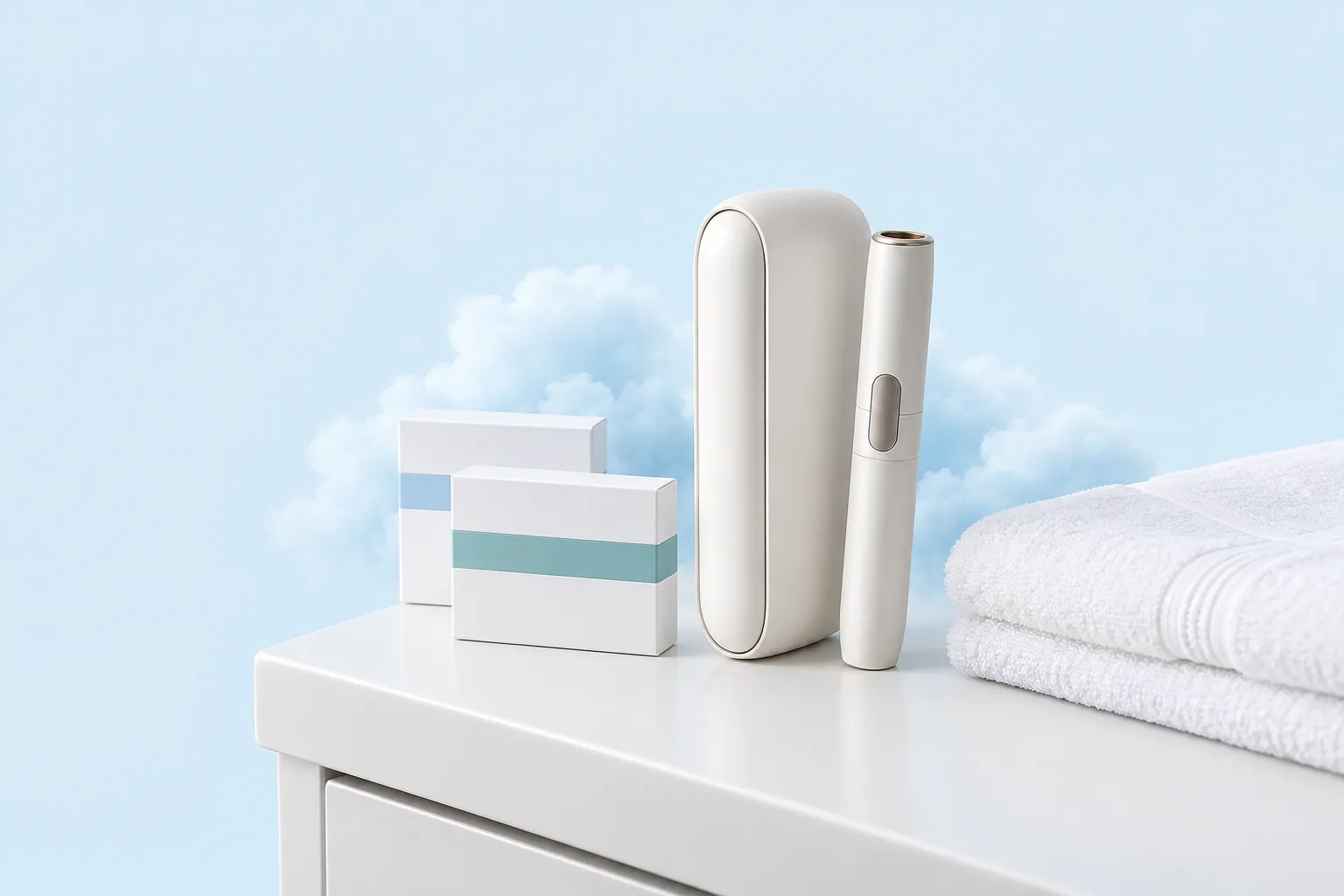
Heated tobacco trips up a lot of visitors. It’s real tobacco, so people assume it counts like cigarettes. It doesn’t: Thai rules treat IQOS devices and sticks as part of the e-cigarette ban. There’s more detail in our guide on whether IQOS is legal in Thailand.
Is it illegal just to use a vape?
This is where most confusion starts. Thai law has no clause that says “vaping is illegal.” Instead, users can be caught by the possession rule in the Customs Act, or by the no-smoking-zone fine if they vape somewhere smoking is banned.
The distinction matters little in practice. Foreign governments sum it up simply. The UK Foreign Office says it is illegal to “possess or use any vape, e-cigarette, pod, e-liquid, or heat-not-burn device in Thailand,” and that “there are no exceptions for tourists or for personal use.” Canada, Australia, Ireland and New Zealand say much the same.
If you’re American, don’t expect a warning from home. The US State Department’s Thailand page doesn’t mention vapes at all, so many US travelers arrive without knowing about the ban.
Airports: where the rule is enforced most strictly
Everything above applies across the country, but enforcement isn’t spread evenly. The one point where the ban is applied by the book is customs, when you arrive on an international flight.
Your bags can be X-rayed or opened at the customs exit, and a vape or IQOS found there is confiscated. A fine is possible on top of that. It’s the only checkpoint on your trip that exists to find prohibited goods.
Airline rules add a twist. Your carrier lets you take a vape in your carry-on, which makes it feel allowed. It isn’t. Airline rules are about battery safety on board, not about what Thailand lets in. We cover packing, carry-on rules and what to do if a vape is already in your bag in our airport and customs guide.
The simplest approach is to arrive with nothing to declare and get what you need delivered after you land.
On the street, beaches and in bars
Away from the airport, things are much softer. Travelers report that people who vape discreetly rarely have a problem. When something does happen, it’s usually a request to put the vape away, from bar staff, hotel security or a police officer.
Fines do happen, though they aren’t the norm. The UK government puts typical fines at 5,000–30,000 baht (about $146–$875), usually with the device confiscated. There’s no fixed on-the-spot fine for vaping, and amounts vary a lot. We break down the numbers, the real cases and what to do if you’re stopped in our guide to vape fines in Thailand.
A few places draw more attention than others:
- Beaches with smoking bans. Some of the best-known beaches, like Patong in Phuket and all of Pattaya’s beaches, ban smoking outright. Vaping there adds a second problem to the first.
- Indoors. Restaurants, bars, malls, public transport and hotel common areas are no-smoking by law. Hotels charge cleaning fees for smoking in rooms, and a vape is unlikely to get a pass.
- Nightlife streets during crackdowns. Police raids target street sellers, and anyone vaping nearby is more visible.
Is anything changing in 2026?
Not in the direction some travel blogs suggest. No legalization proposal is moving forward in 2026.
Here’s how the last two years played out:
- March 2025. A parliamentary committee voted to recommend legalizing and regulating vapes and heated tobacco. The health ministry and anti-smoking groups opposed it, and the government didn’t act on it.
- October 2025. The cabinet approved draft amendments to tighten the Tobacco Products Control Act. They had not become law as of September 2026.
- May 2026. The health minister said the ministry had begun studying a “Nicotine-Free Generation” policy, a lifetime sales ban for people born after a certain year. It’s at a very early stage.
- June 2026. The Royal Thai Police set up a dedicated E-Cigarette Control Centre and ran a nationwide operation in July.
- September 2026. Cyber police reported 151 arrests of online sellers and more than 140 million baht in goods seized over the year.
The pattern is consistent. Enforcement is aimed at importers, distributors, online sellers and pods laced with drugs, not at individual visitors. The law hasn’t softened, though, and the rules for users haven’t changed.
Practical rules for your trip
If you vape or use IQOS and you’re heading to Thailand, these habits keep things low-key:
- Don’t pack your device. Customs is where the ban is enforced most consistently. Leave vapes, pods, e-liquids and IQOS at home.
- Keep it out of no-smoking zones. No vaping indoors, on public transport, or on beaches with smoking bans. Follow the signs.
- Be discreet in public. No big clouds on a busy street, no vaping at a police checkpoint or in front of officers.
- Carry your passport. Foreigners are expected to carry ID, and not having it can turn a small stop into a longer one.
- Skip street stalls. They’re the main target of raids, and police in Bangkok and Pattaya have caught sellers offering pods laced with drugs such as etomidate and ketamine. You can’t know what’s inside.
- Don’t take anything home. Australia, Singapore and India all restrict or ban bringing vapes or heated tobacco in, and your home country’s customs is a separate problem.
If you’d rather not go without for your whole trip, you can have IQOS ILUMA i and TEREA or disposable vapes delivered to your hotel. Our manager on WhatsApp or Telegram confirms stock, price and your address before you pay, and the box arrives plain, with no brand names. Here’s how ordering works.
Sources
- GOV.UK: Thailand travel advice, Safety and security (FCDO)
- Thailand.go.th: Electric and electronic cigarettes are illegal in Thailand
- Tobacco Control Laws: Thailand, heated tobacco products
- Pattaya Mail: Thailand declares war on illegal e-cigarettes (June 2026)
- Bangkok Post: 151 arrested in e-cigarette blitz (September 2026)
- Nation Thailand: Health ministry studies a Nicotine-Free Generation policy (May 2026)